Flavours of Nepal
Service design for a survivor-led social enterprise, Pokhara, Nepal
My role
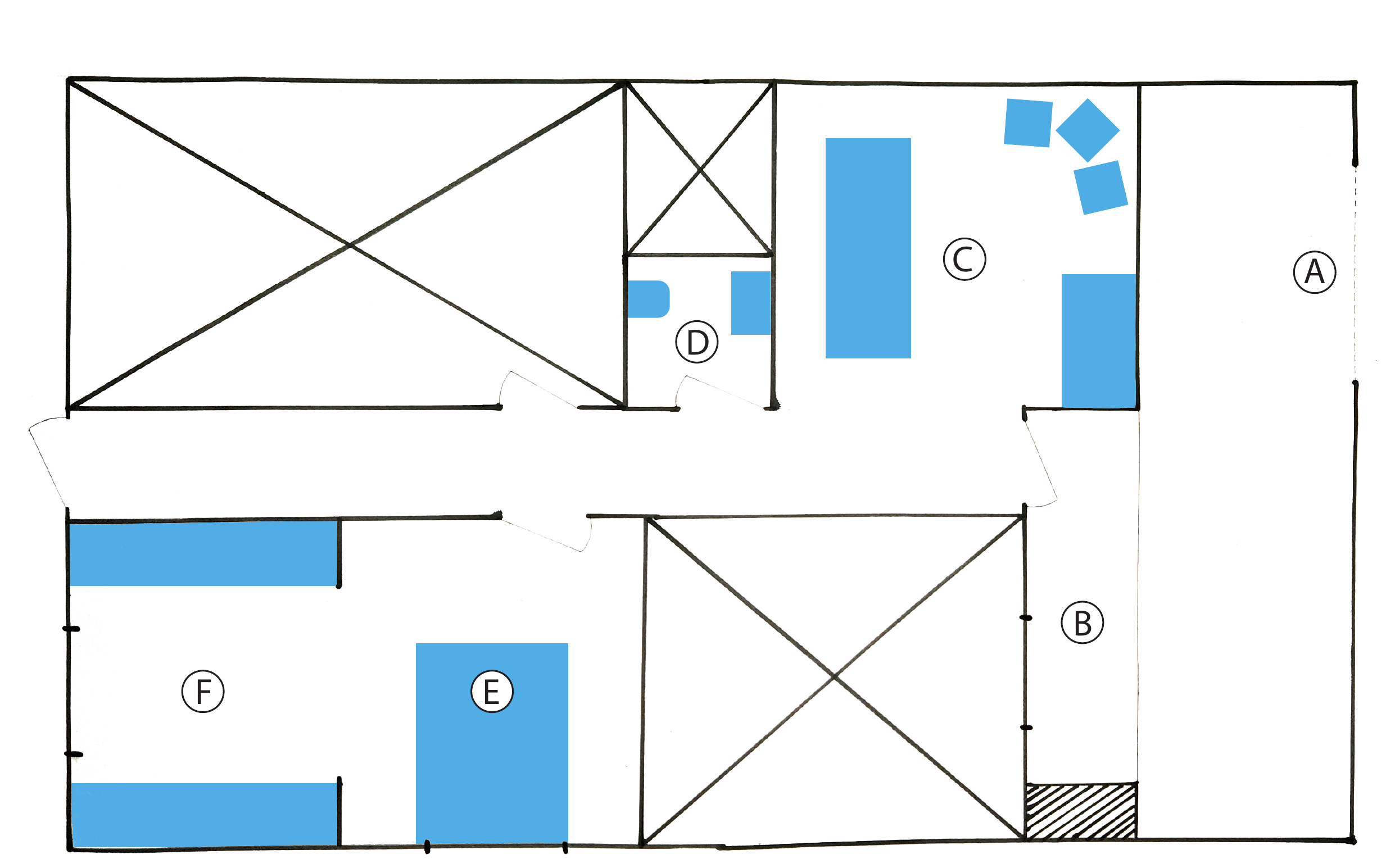
I conducted competitive research on cooking classes and field research in Pokhara and Kathmandu, and also co-facilitated interviews and a workshop with stakeholders. Additionally, I created an interactive floor plan as a generative tool, based on a teammate's idea, to find pain points and design opportunities.
Based on this research, I redesigned the cooking class to incorporate Nepali culture and storytelling, and wrote an implementation plan.
Women once silenced by trafficking now give travellers a taste of Nepal.
We were asked to help that mission earn its own way.

Who SASANE is
Founded in 2008, SASANE is a survivor-led NGO based in Pokhara and Kathmandu, built on one principle: every woman has inherent worth. It works against human trafficking, child marriage and violence against women, and trains and employs women who survived trafficking as trekking guides and hospitality professionals. By its own account, it is the only survivor-led trekking organisation in the world.
How does a survivor-led nonprofit fund itself, without asking survivors to carry the cost?
SASANE needs $200K USD every year to run its programs. Only 5% of that comes from the four services it sells: guided trekking, cooking classes, homestays, and handicrafts. Together, they were supposed to make the organisation less dependent on donors.
They weren't.
95% of SASANE's annual budget comes from donations and grants, not from the services survivors deliver.
5% comes from all four for-profit services combined, against a $200K annual need.
An organisation this dependent on donations cannot treat earned revenue as a side project. Whichever service we recommended had to actually work.
Our brief was to find out why, and to strengthen one of SASANE's two most visible services, trekking or the Pokhara cooking classes, without asking the women delivering it to absorb the risk.
What we delivered, and what we didn't get to see.
in one redesigned cooking-class experience, built on the same staff, kitchen and infrastructure SASANE already had.
cultural moments placed inside waiting periods the class already had: no new staff, space, or budget required.
NPR 15,700, the full cost of the physical improvements, designed around a budget that couldn't flex.
What we didn't get to see
This was a three-week, school-led engagement, not a commissioned implementation. We presented the plan to SASANE's director and staff and OCAD faculty, but the physical improvements weren't installed while we were there and no follow-up was built into the program. The redesign was never tested against real bookings or revenue, so what it does to that 5% is something we didn't get to measure.
The numbers pointed at trekking. The people pointed somewhere else.
Each method below tested what the data alone couldn't tell us: whether trekking or cooking classes could actually carry SASANE's financial goal.
9 conversations
Shyam, SASANE's director; five SASANE staff members; two tourists; and the director of Skylark, the local agency that earns a commission on every tourist it brings to SASANE, whichever service they book.
We took the class ourselves
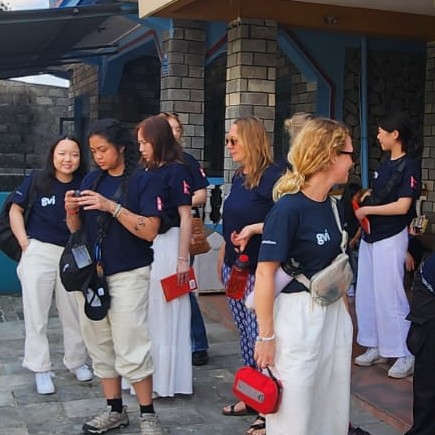
My team and I took the cooking class as paying tourists, to feel the hands-on version instead of the version described to us.
Pokhara competitors
I walked Pokhara independently and researched local cooking-class competitors.
Why trekking wasn't the answer
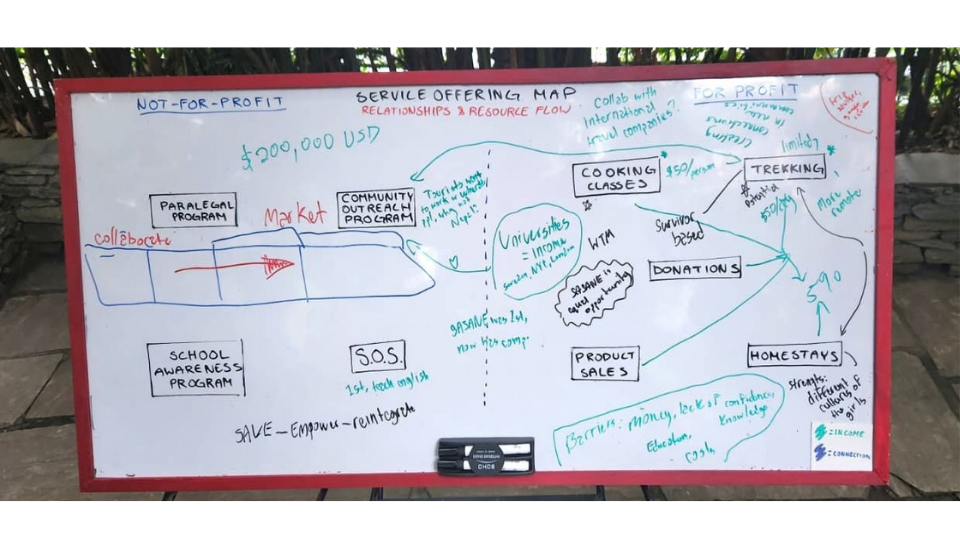
Trekking looked like the obvious lever on paper: SASANE's most differentiated offering and its highest-earning service. Two kinds of evidence said otherwise.
- The first came from the women who would have to deliver it. In interviews, the SASANE staff explained plainly that many preferred to continue their education or move into work unrelated to physical guiding. Others were still living with trauma from what trafficking had done to them, and multi-day treks into remote terrain, alone with strangers, were not something that felt safe to ask of them.
- The second came from the market. In my interview with Skylark's director, whose agency earns the same commission whether a tourist books a trek or a cooking class, they described what SASANE was up against. Trekking is an industry with entrenched, well-resourced competitors who have years of trail relationships and specialised guides SASANE couldn't match. Guide liability and insurance add real financial risk. The trekking locations SASANE has access to are limited, and tourists are slower to trust a survivor-led guide on a multi-day trek than a two-hour cooking class. None of that was a design problem to solve. It was the market SASANE was trying to enter.
If the people delivering the service are not willing and comfortable, the service cannot succeed, no matter how strong the market opportunity looks from the outside.
SASANE's own management still saw trekking as the scalable opportunity. I raised this directly in a call with my team, the program's professor, and SASANE's leadership: scaling a service the people delivering it don't want, that carries this much operational risk, will not sustain itself no matter how strong the market looks on paper. Shyam didn't change his mind that day, but the conversation shifted enough that the direction, strengthening the cooking class instead, held.
What we found inside the cooking class
As participant observers, we went through the class exactly as a tourist would:
- Shaped momos (traditional Nepali dumplings) with the staff
- Ate them
- Watched a promotional video on human trafficking from G Adventures, a former sponsor. It mentioned SASANE's work only once.
- Browsed the handicraft shop
Then it was over.
The staff were warm and skilled, and the momos were good. What stood out after the group debrief was what never came up: nothing about Nepal beyond one dish, nothing about how Nepali women live, nothing about the culture the class sat inside. The only time SASANE's mission entered the room was through a screen, and the screen was advertising someone else. Also, the tourists we interviewed wanted exactly what was missing: not a momo recipe, but a real sense of Nepal, more than a dish to photograph.
The class sold an activity, not a place.
Folding a momo is something guests can do in almost any kitchen in Pokhara. What they couldn't get anywhere else was the culture around the dish and the lives of the women serving it, and the class left both out. That gap became the starting point for the redesign.
Having seen the gap ourselves, we wanted to know whether the staff saw it too.
When neither side spoke the same language, we built one.
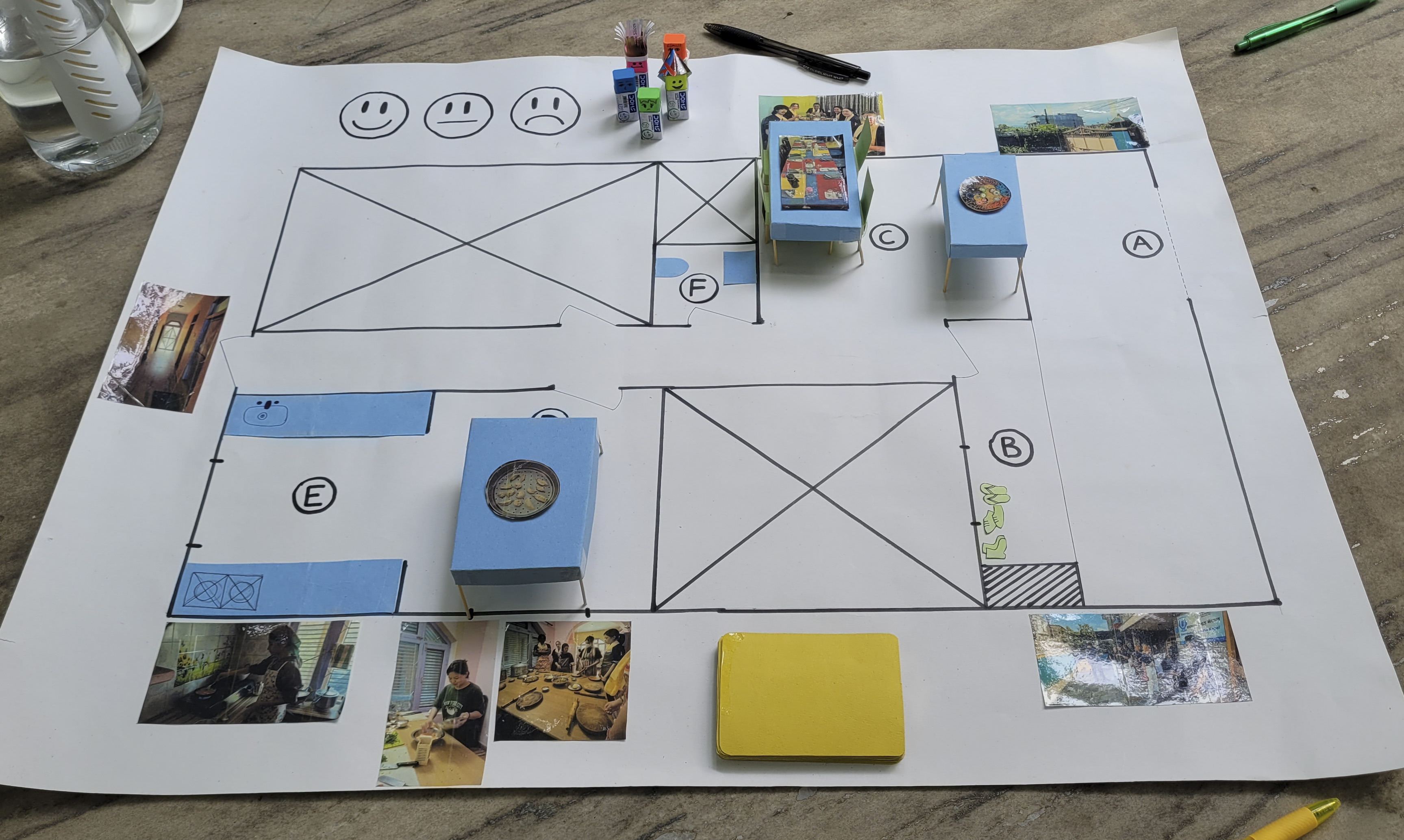
A cardboard floor map and questionnaire worksheets served as a generative tool.
workshop length, walking through the experience step by step with real participants.
five SASANE staff and survivors, Skylark's director, and two tourists.
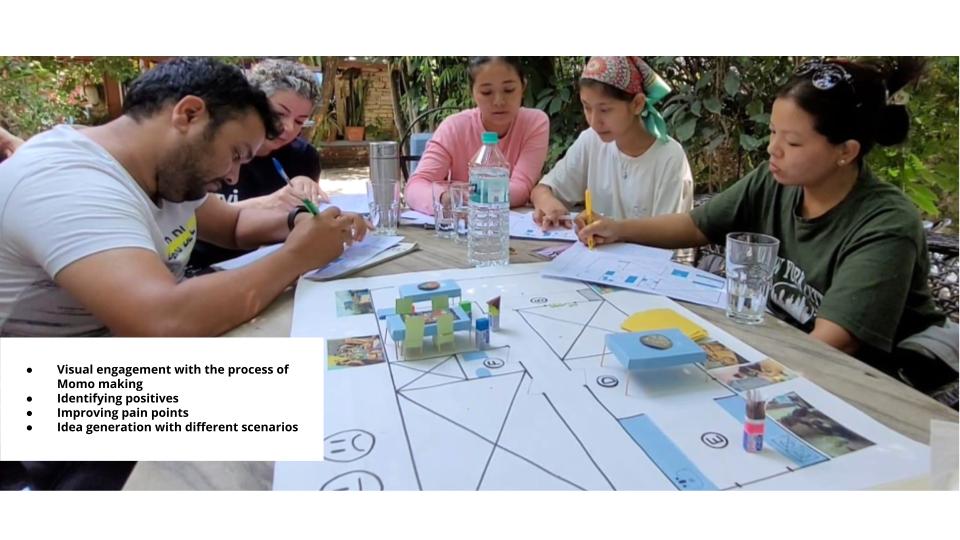
Standard design facilitation tools, such as abstract frameworks, often rely on a shared vocabulary. However, SASANE's staff had limited or no proficiency in English, and we didn't speak Nepali. The service design terms we typically used (like service blueprint, user journey map, and touchpoint) held little meaning for them. We needed a tool that could act as a bridge rather than a mere translation exercise.
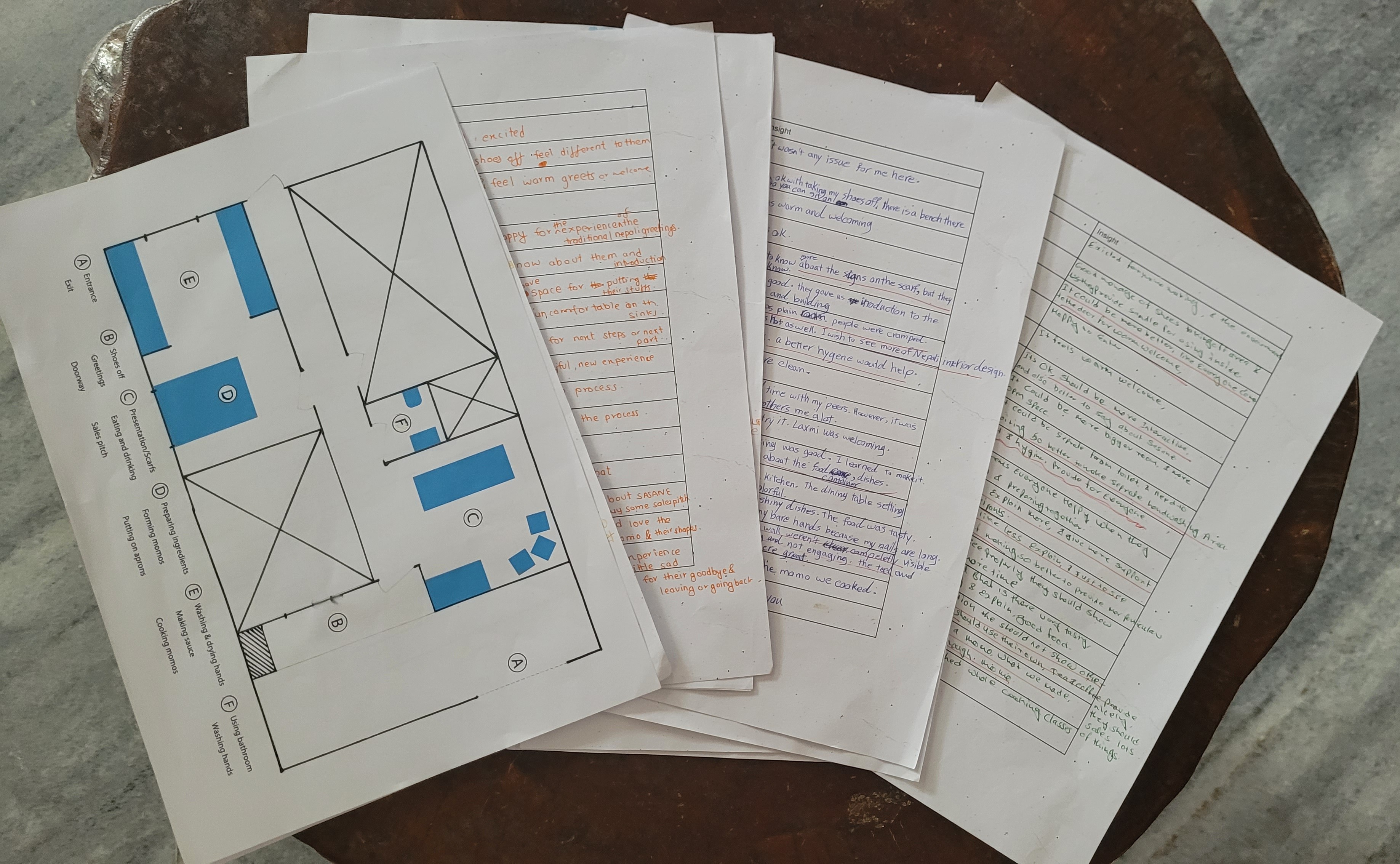
One of my teammates proposed mapping the space using a floor plan, and I developed the idea into a physical model people could walk through without needing design terminology: the SASANE building in cardboard, with miniature furniture and mini figures for staff and tourists. Every participant also had a paper copy of the same plan as their worksheet.
How one walkthrough worked
- 1We moved the figuresAt each zone, we placed the mini figures: one for a SASANE staff member, the others for tourists.
- 2Participants told us the stepsWe asked staff and participants what the staff member and the tourists do at that point. SASANE staff who spoke English explained our questions in Nepali to colleagues who didn't.
- 3Everyone wrote it downEach participant wrote on their worksheet what works and what needs improvement at that zone, in Nepali or English.
- 4Repeat, then translateWe repeated this zone by zone, from A to F. Afterwards, an English-speaking staff member translated the Nepali worksheets for us.
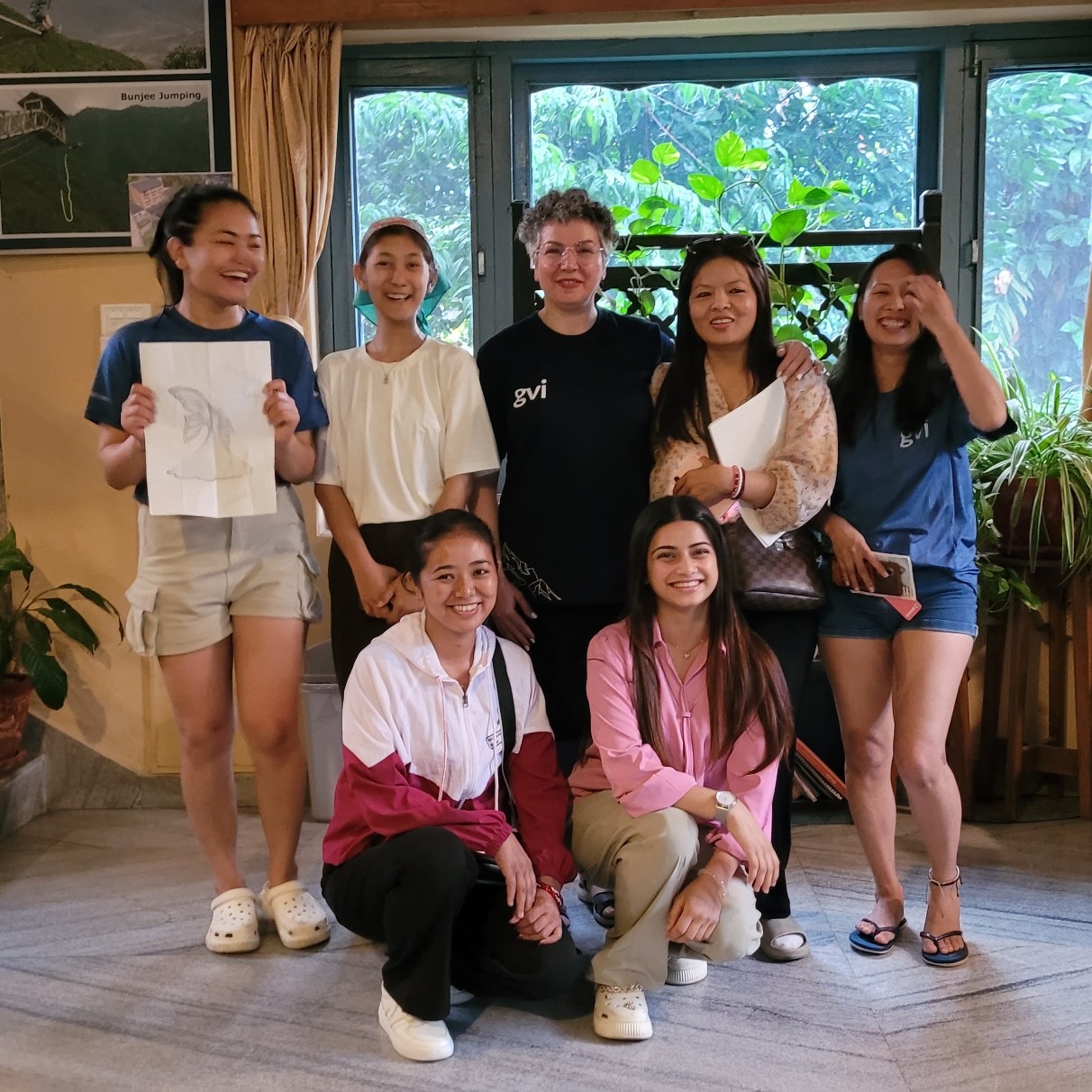
Inside the workshop
How we prepared and ran the session: planning sketches, the cardboard model, the mini figures, and the worksheets participants filled in, in English and Nepali.
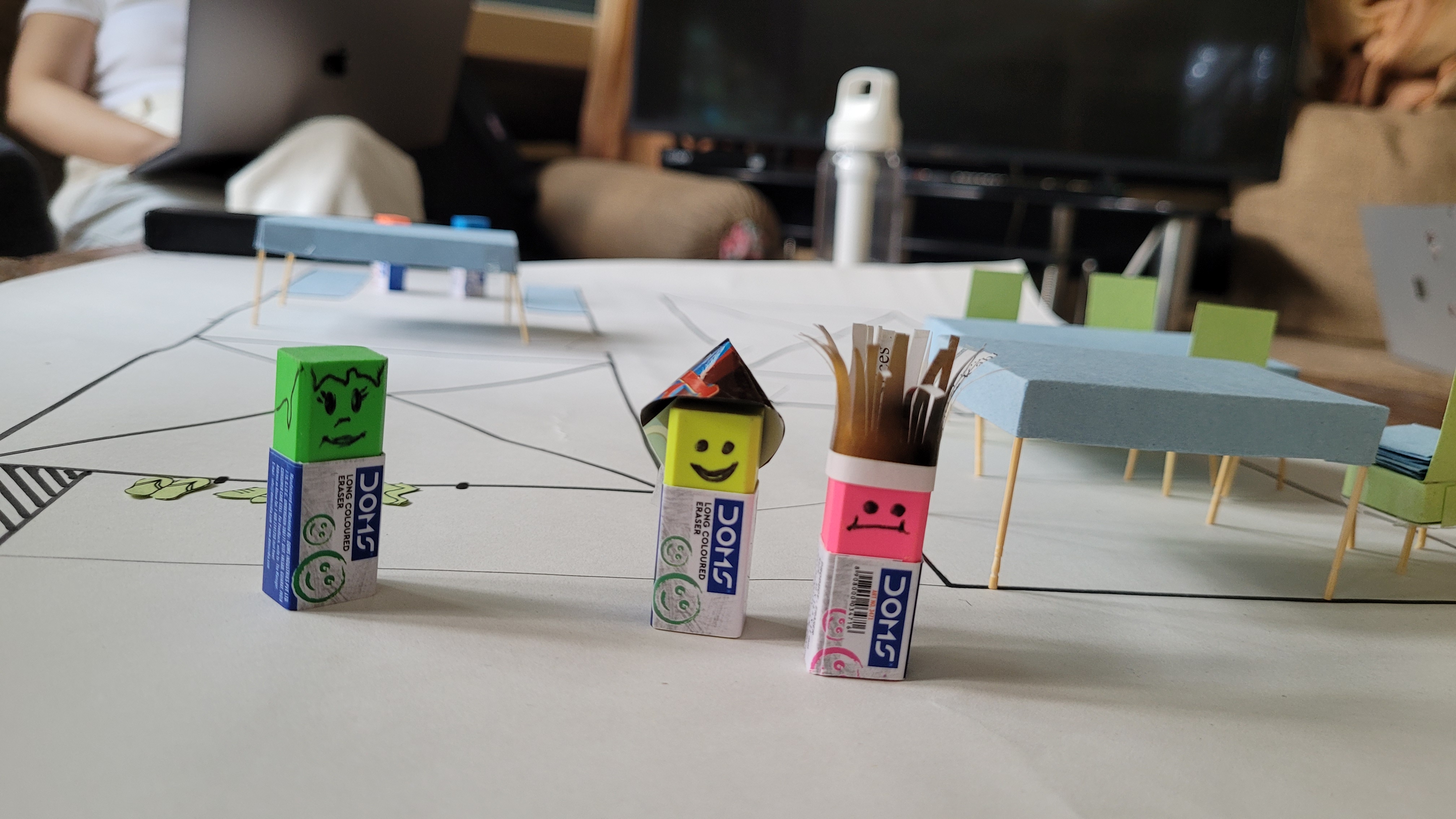
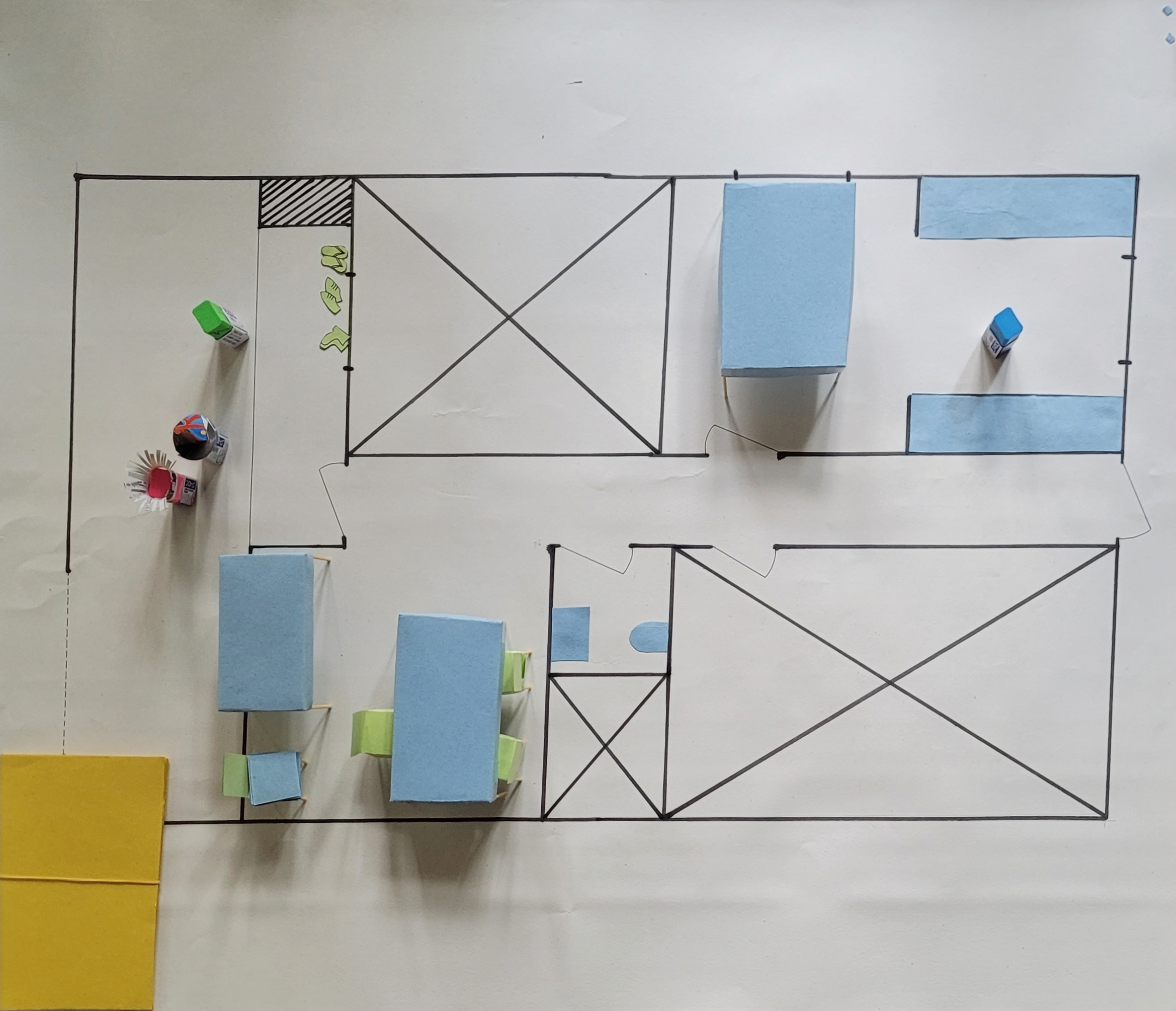
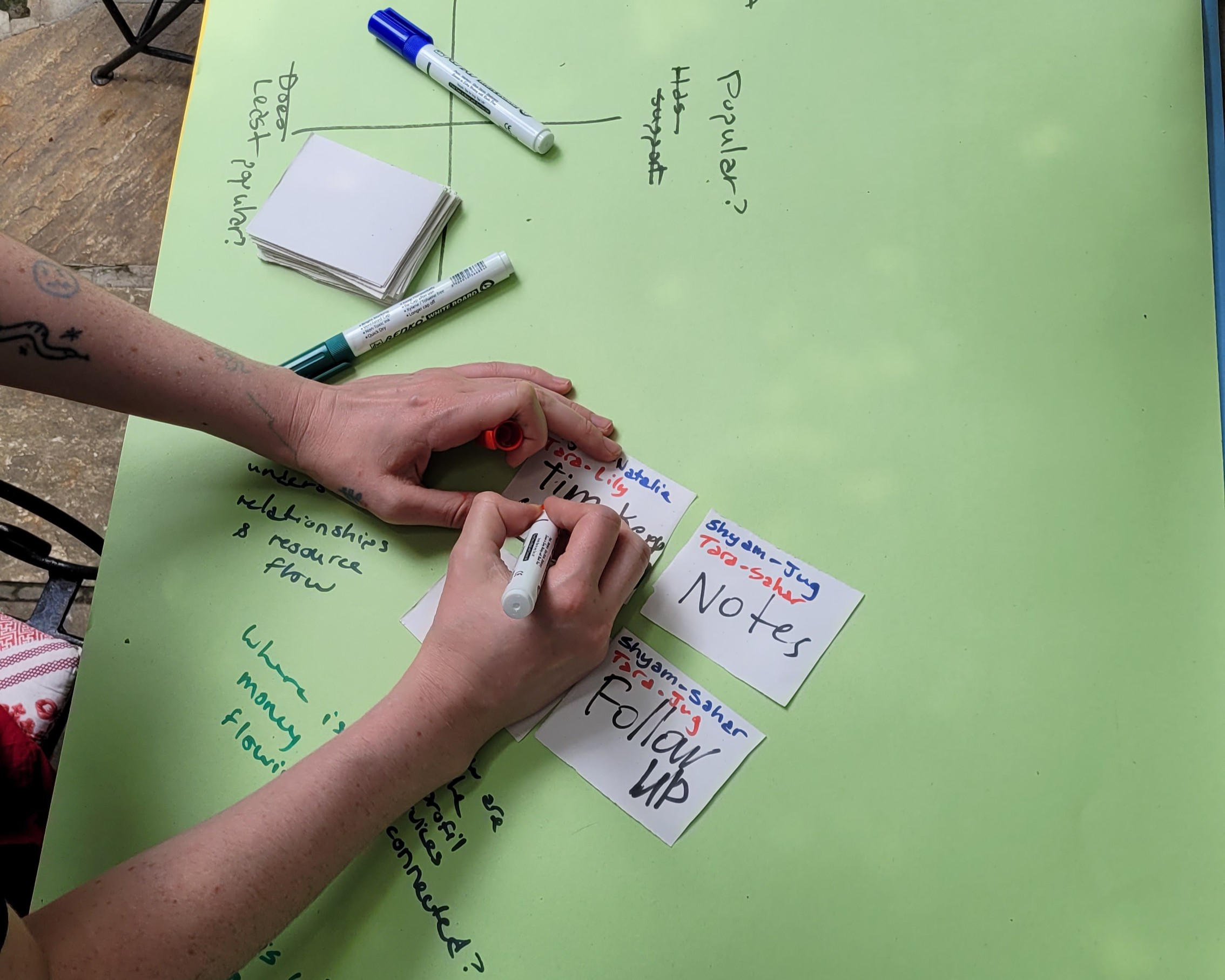
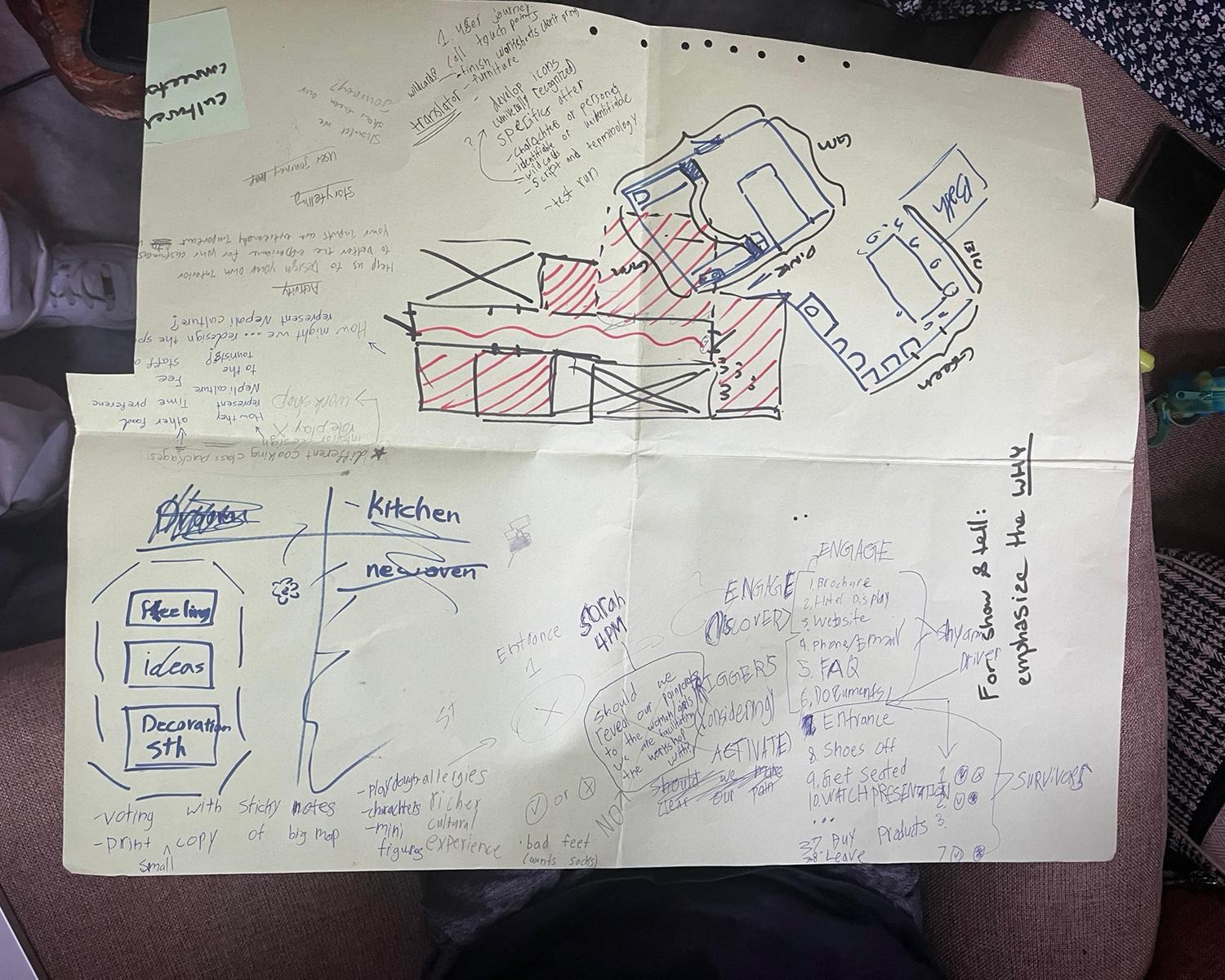
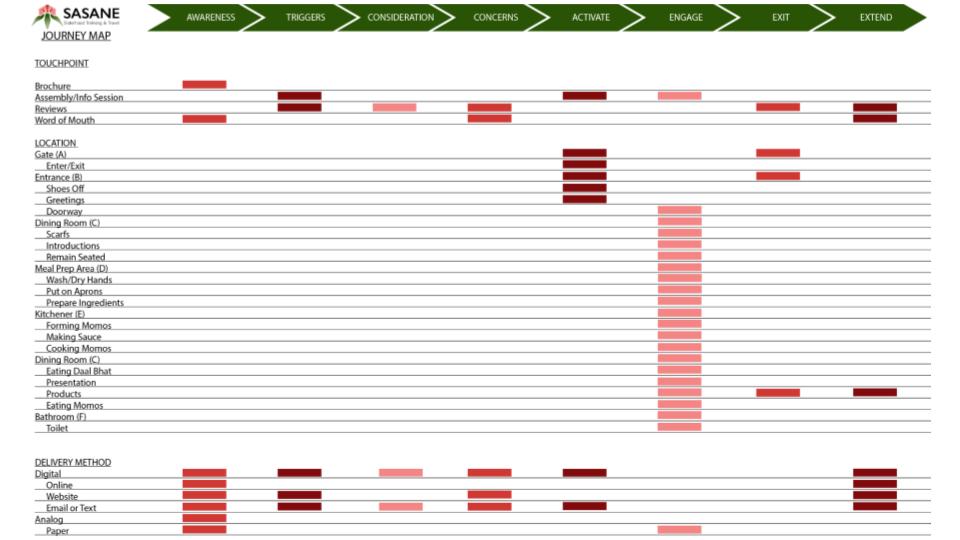
Based on the insights from the interviews, our own experience, and the co-design workshop with the SASANE staff, my teammates created the journey map and the spatial map.
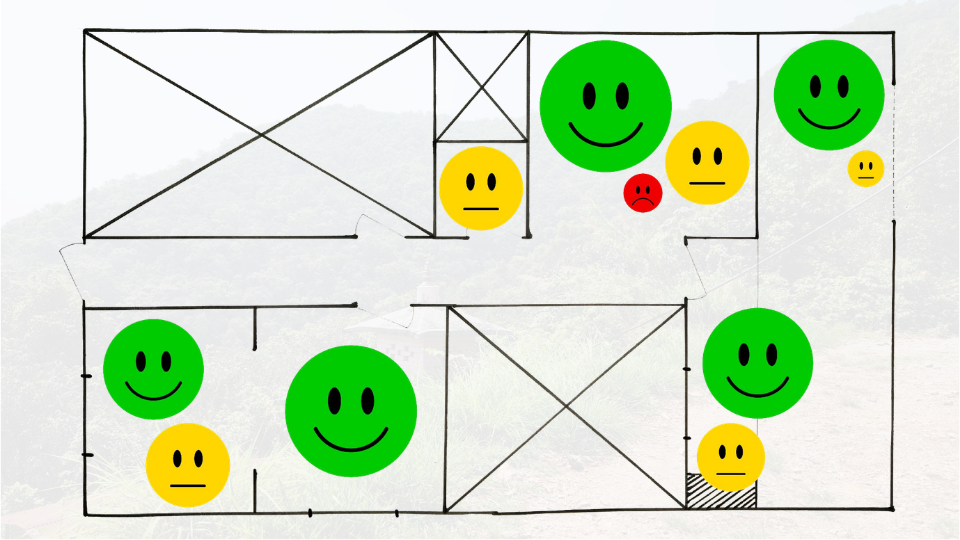
Participants could see what was broken in the room. They could not yet see what was missing from the experience.
The feedback was warm, then practical:
- The gate was too short
- The bathroom doorway was too low
- The momo-forming technique needed more explanation
Nothing about culture. Nothing about story. That absence, not the list of fixes, was the actual insight.
Looking back, we held the figures the whole time and moved them along the class as it already ran, so participants described the existing experience instead of imagining a new one. Next time I would hand them the figures.
What the market was really missing
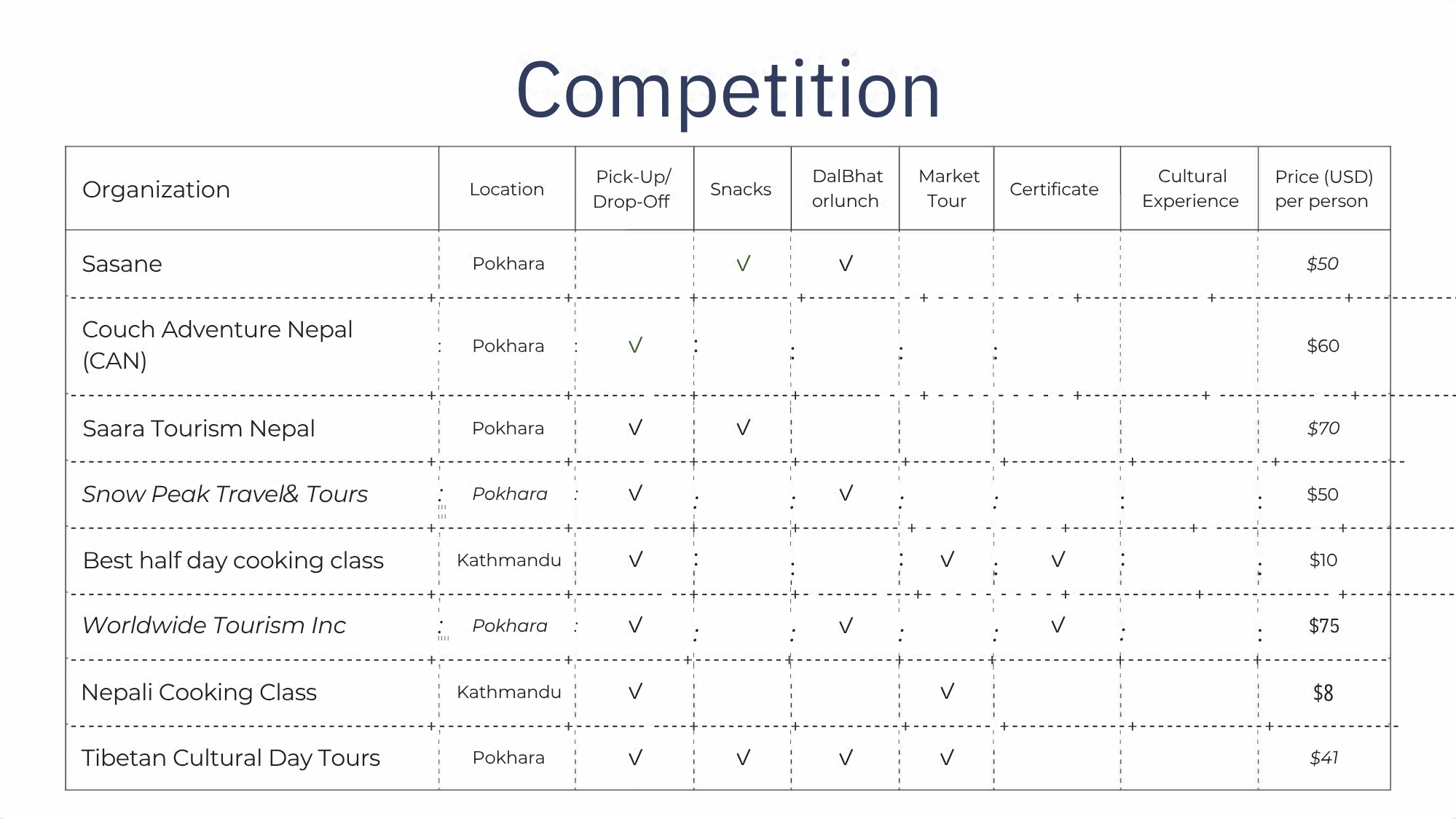
To find out whether SASANE's price or format was the actual problem, I compared its cooking class directly against Pokhara's other operators, service by service and price point by price point. Every one competed on the same logistics: pick-up and drop-off, certificates of completion, a guided market tour before class.
None offered cultural depth, structured storytelling, or a connection to a social mission.
SASANE's $50 sat comfortably inside Pokhara's $40 to $75 range, so price was never the problem. Nothing in the experience justified it or set it apart, and that gap is exactly what the redesign was built to close.
We didn't redesign the cooking class. We redesigned what it was for.
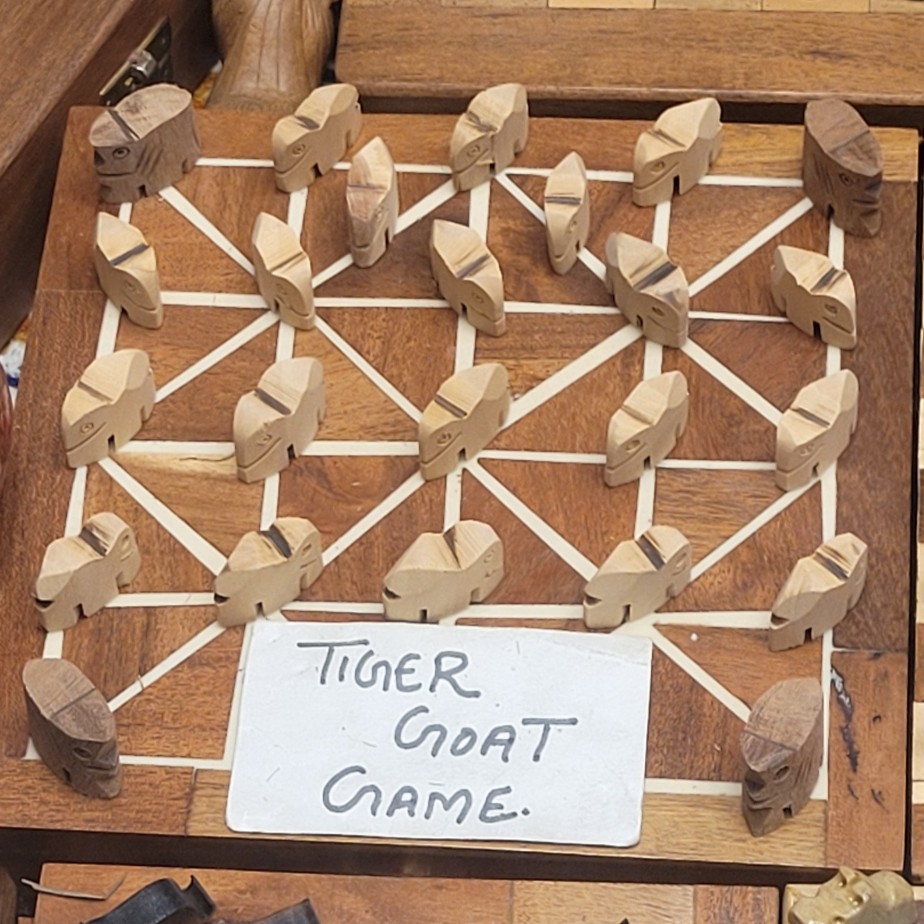
So the redesign adds small moments of culture: anecdotes, a reading from Sold, a Nepali language lesson, and the Tiger and Goat board game. Each one opens a real conversation between guests and SASANE staff about everyday life in Nepal, instead of everyone sitting through a quiet wait.
A pleasant afternoon is not enough at $50 a head in a market full of competitors offering the same logistics. Building cultural identity into the redesign was my idea, and it became the throughline for all 8 touchpoints below, giving each one more meaning than a sequence of cooking tasks ever could. The pricing and competitive reasoning behind that call is laid out below.
This reasoning shaped the redesign; it was never tested against real bookings or revenue.
Pricing headroom. Every competitor sold the same pick-up, market tour, and certificate at the same price point. SASANE had room to charge closer to the top of the range once the experience itself gave guests a reason to pay more.
A moat competitors can't copy. Rivals can add a market tour. None can offer a class run by a survivor-led organisation, with its mission built into the experience.
A lever that costs nothing new. Competitors add value by adding services; this adds it by using time guests were already spending in the room.
A story guests retell. Guests rarely talk about a recipe after their trip. A class that leaves them understanding SASANE's mission gives them something to share, and word of mouth could bring in participants that a market tour never would.
The 8-step class SASANE already ran (navy), with five cultural enrichments (terracotta) nested under the two waiting periods where the implementation plan actually places them.
Greeting & Arrival
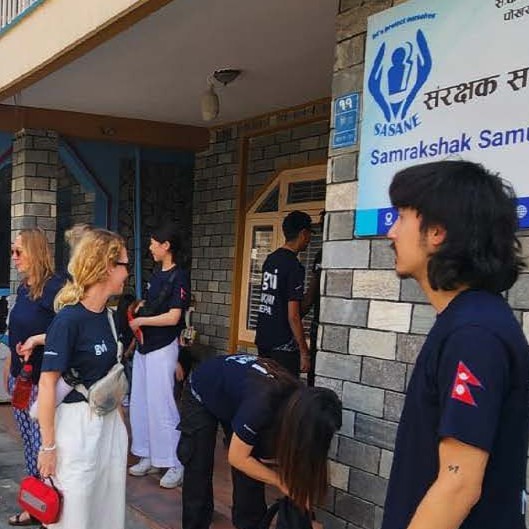
Welcomed at the gate, shoes off at the doorway, then greeted with a khata scarf and seated in the dining area.
Orientation
Staff walk guests through the momo-making process and the session's expectations.
Momo Making
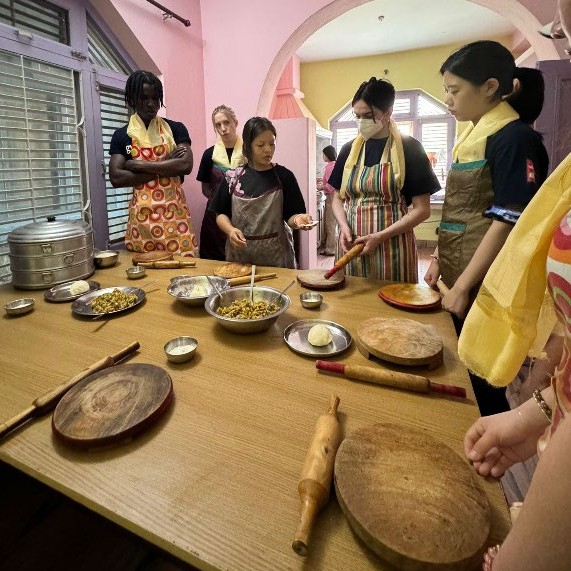
Guests wash up, prep ingredients, and shape momos with staff guidance; staff cook them.
Dal Bhat Lunch
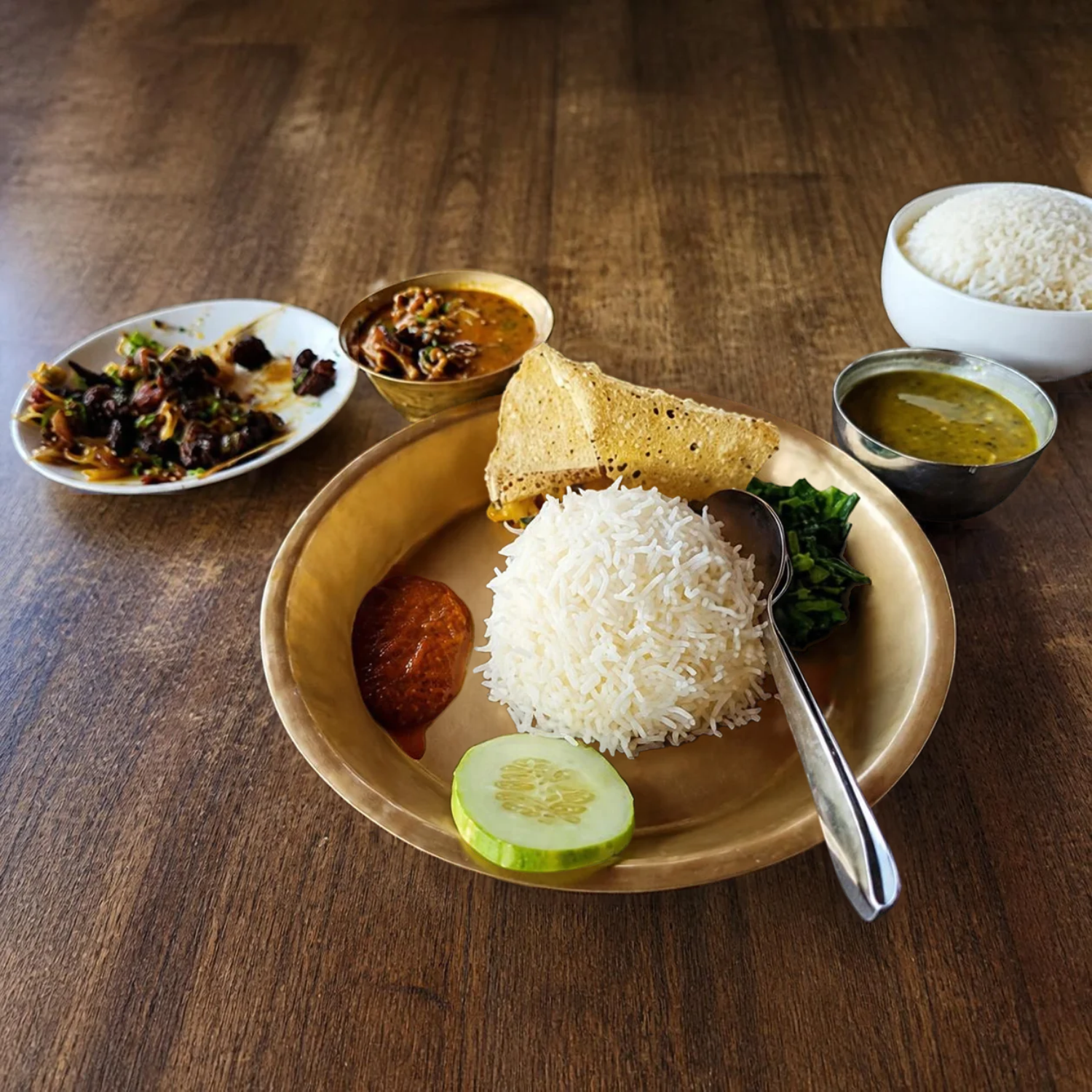
Traditional Nepali thali, Dal Bhat, served in brass dishes after a short wait.
WHILE GUESTS WAIT FOR THE MEAL:
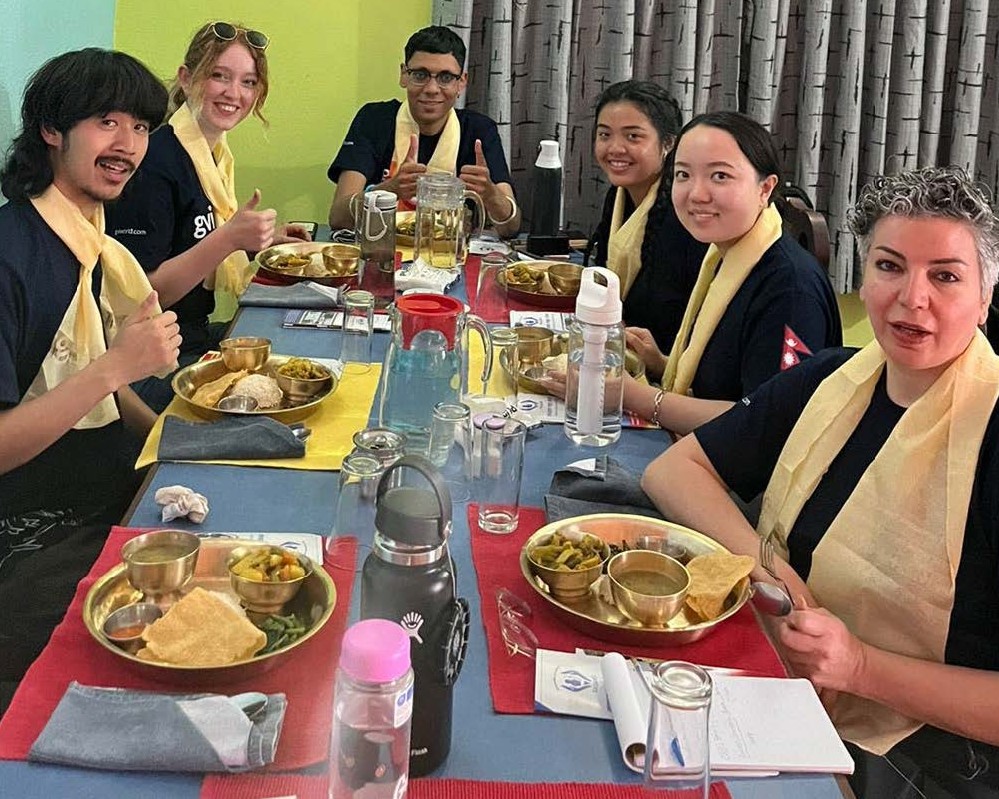
Anecdotes & Fun Facts
A short story while lunch is prepared, e.g. the Buddhist symbols on the welcome scarves.
Background Music
Soothing Nepali music or jazz playing during the meal.
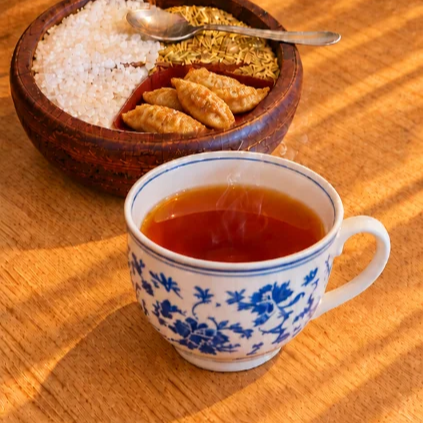
Serving Tea
Tea is served to guests as the next course of the visit.
Reading from "Sold"
A short excerpt while tea steeps, opening the trafficking topic gently.
Why this bookLanguage Lesson or Tiger & Goat
An alternative activity: staff choose a Nepali phrase lesson or the Tiger and Goat board game, not both.
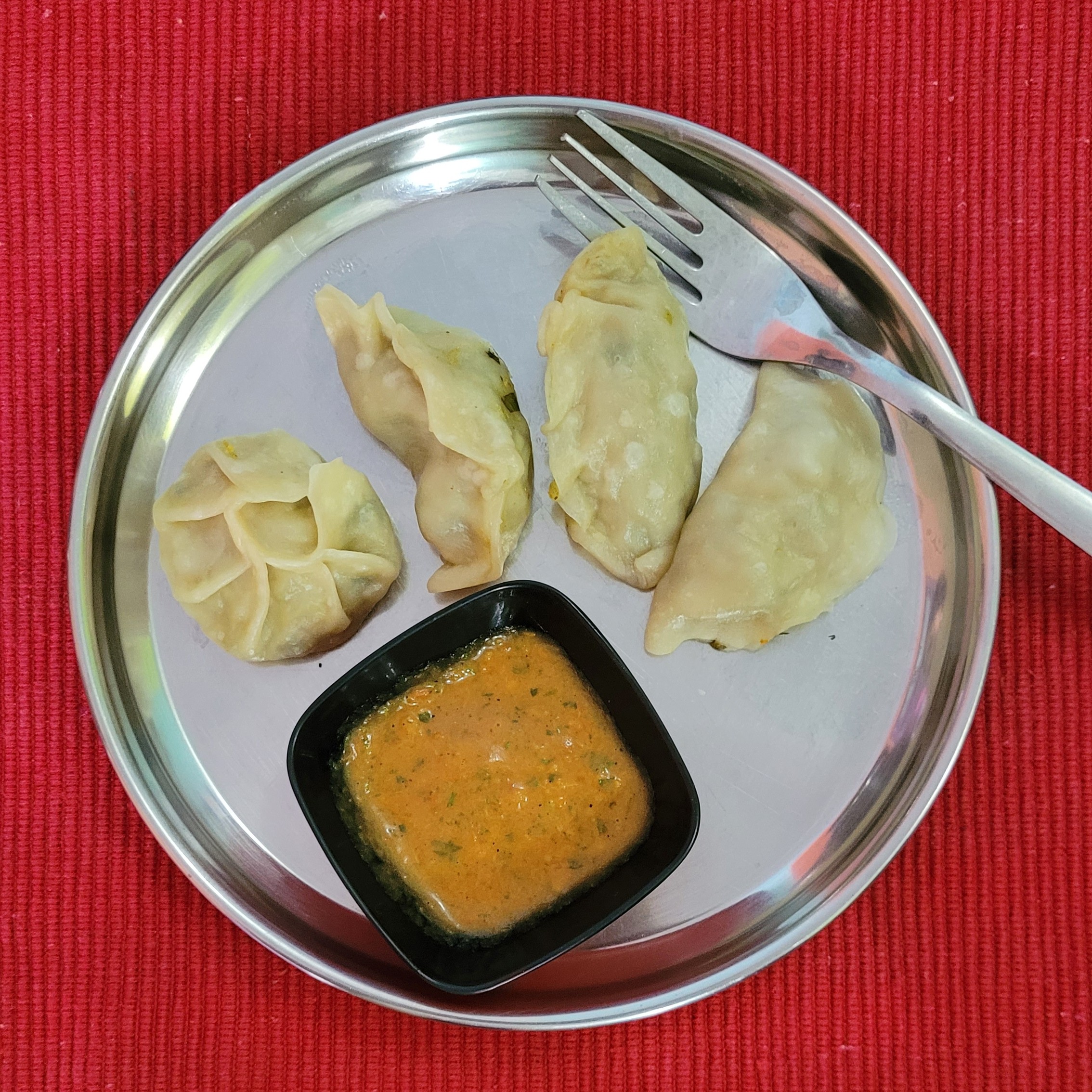
Momo Reveal
The momos guests shaped are served, with staff sharing the dish's history.
Mission Presentation
A new SASANE video about its own work, replacing the former sponsor's ad, with slides on human trafficking, plus browsing and buying handicrafts.
Farewell
Guests are guided back to the main gate by SASANE staff.
Note: the language lesson and board game are alternatives the plan offers, not two guaranteed extras every session; they're shown here as one combined chip so the diagram doesn't overstate them as "five things happen every time."

The sensitive call: readings from Sold
- The problem: SASANE's mission only reached guests through a former sponsor's ad.
- The call: Short readings from Sold, a novel about a Nepali girl trafficked into exploitation, read by a staff member during tea. The staff are survivors. A novel lets them speak about trafficking without telling their own stories.
- The bridge: The reading opens the topic. The mission presentation at step 7, with a new SASANE video, connects it to the women in the room and to the work their booking funds.
Two formats
- A short session (1.5 to 2 hours): momos are prepared by the SASANE staff.
- An extended session (3.5 to 4 hours): tourists are trained and prepare the momos themselves.
Physical improvements
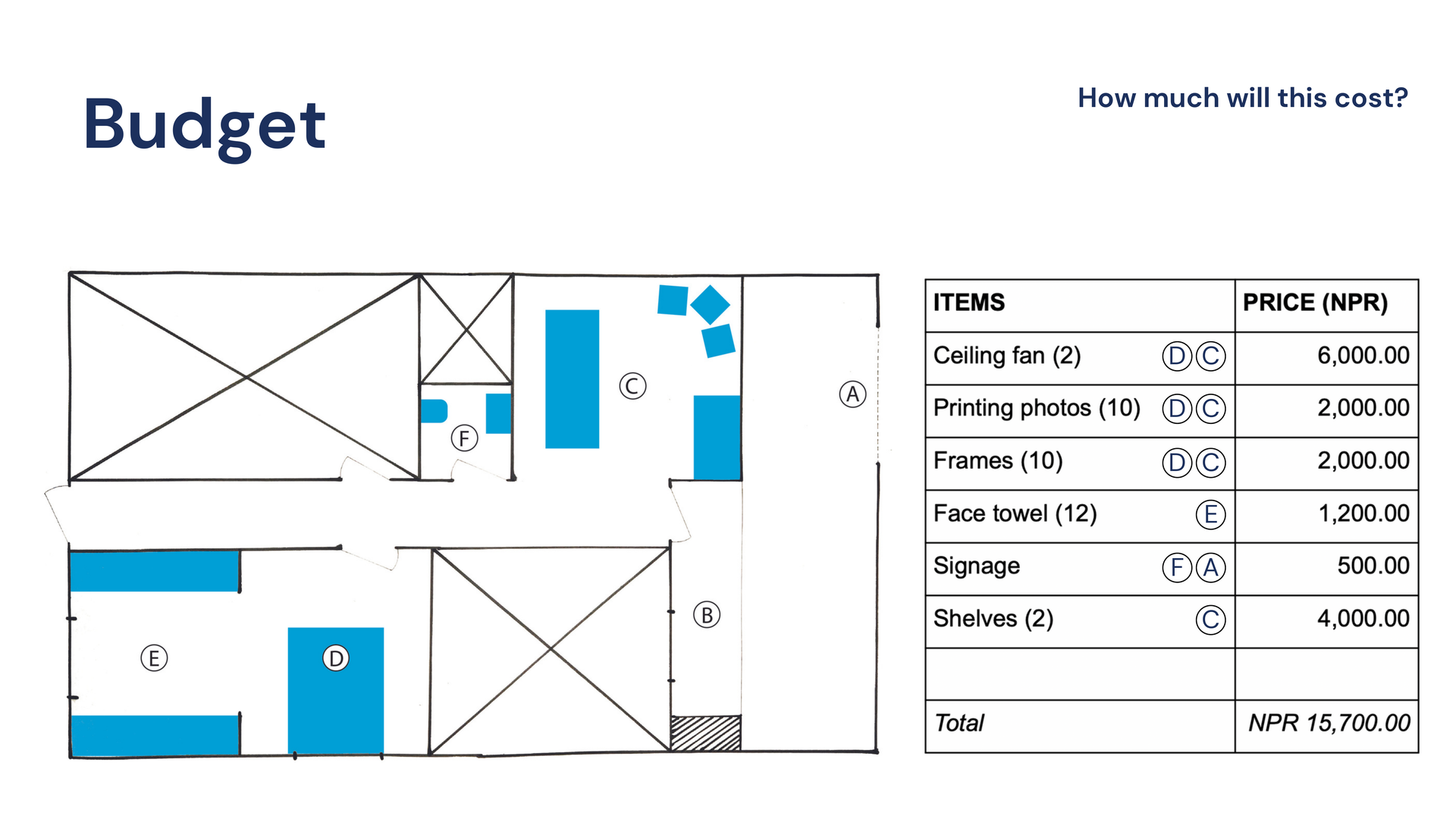
NPR 15,700, about $115 USD: safety signage at the low gate and bathroom doorway, décor, a ceiling fan, cold towels. Designed around a budget that couldn't flex.
Written for the staff who run it
I wrote the implementation plan as a timed, step-by-step script: each of the eight steps with its duration in minutes, which cultural activity fits each waiting period, and what staff say or hand over at each moment. At the final presentation I walked Shyam and his team through the timing of every activity, so the plan could run without a designer in the room.
This project shifted how I work. I arrived thinking design was about solving problems. I left understanding it is about translation: turning constraints into opportunity, and a community's own knowledge into something that respects it rather than uses it.
It changed my approach from solution-driven thinking to context-driven design, and that shift has stayed with me on every project since.
This project also taught me to design for handoff to non-designers, because I would never see the metrics. Success meant leaving SASANE's staff with something clear enough to run without me, not a dashboard I would get to check later.
Thanks for reading. Here's more of my work.
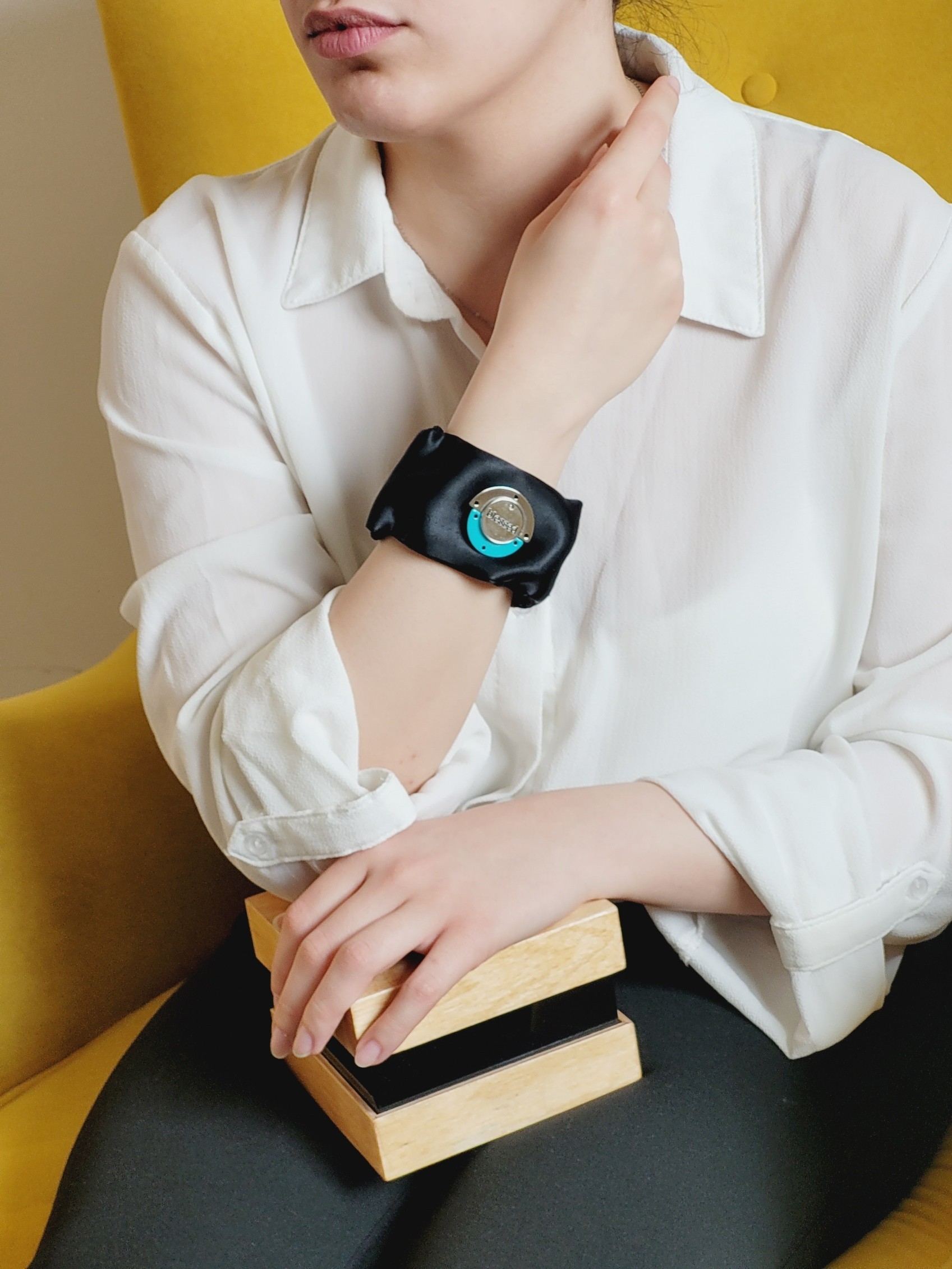
Breaking barriers in menopause care.
A cooling bracelet that transforms hot flash relief from medical necessity into dignified wellness.
A wearable that closes the gap between dementia patients and their caregivers.
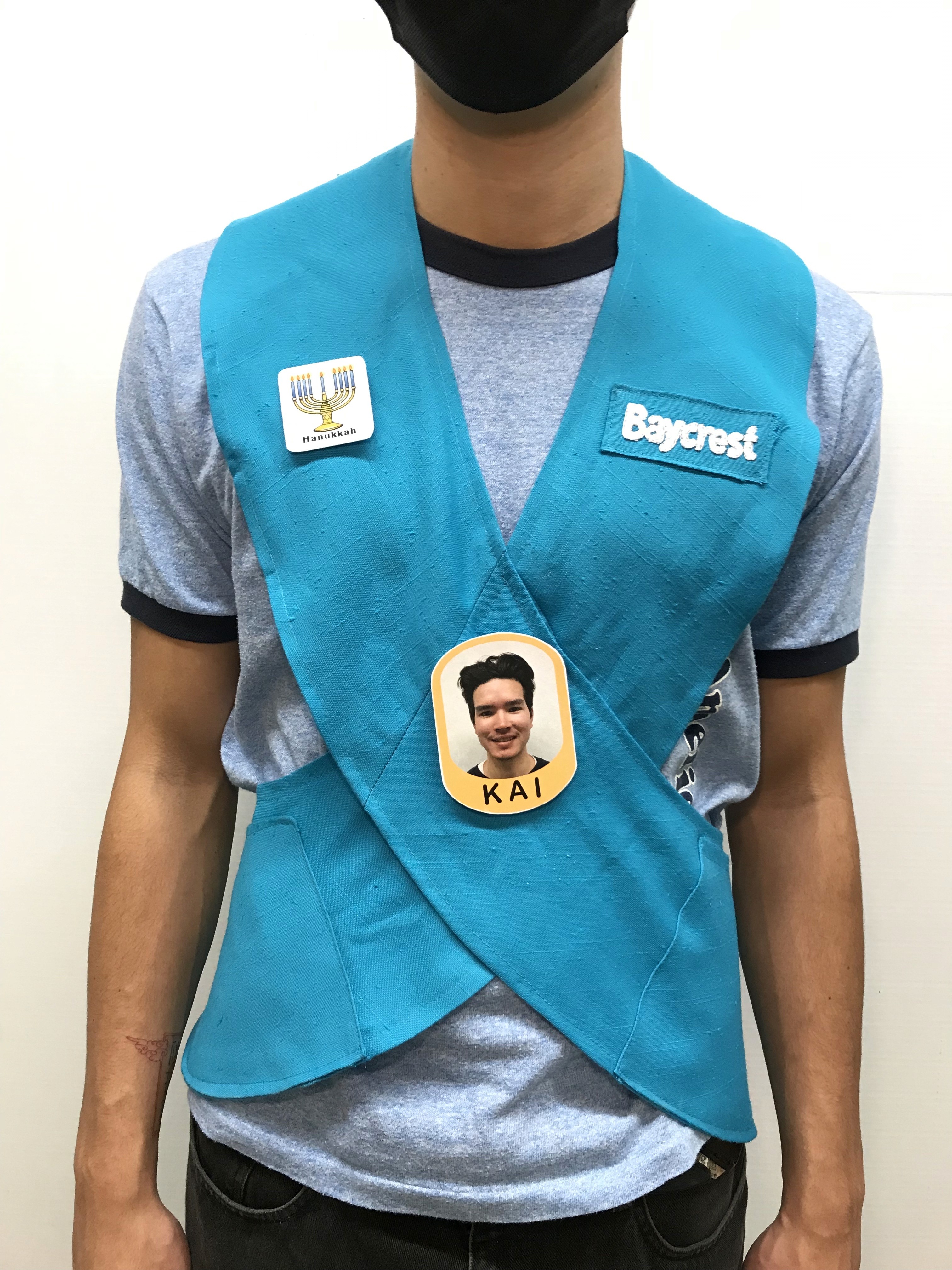
Designed for dignity, presence, and human connection in the most vulnerable moments of life, this caregiver's vest creates common ground between people living with dementia and those who care for them.